On This Page
Two Way Radios for Retail Stores
Why is instant communication mission‑critical now? Curbside stalls 30 seconds while a runner hunts a pickup. Up front, a manager needs a size check two aisles over. In the background, LP (loss prevention) shadows a suspect and can’t broadcast it. Two‑way radios fix that in one press. In this 48‑hour, no‑jargon playbook, we’ll help you pick the right radios, deploy them fast, and measure gains in customer experience (CX), speed, and safety—starting this week.
Why Instant Communication Makes or Breaks Retail Today
Since we’re starting this week, here’s why the clock is ticking: omnichannel retail means BOPIS (buy online, pick up in store), curbside, and same‑day promises colliding with lean crews and rising shrink (theft). Every 20–30 seconds lost at checkout, fittings, or docks stacks lines and dings reviews. Phones slow you down; apps add taps. Two‑way radios give instant, store‑wide reach without logins, so one call mobilizes the right person now.
Radios bypass phone unlocks, app menus, and voicemail—press, talk, done. One‑to‑many communication means a single ask reaches cashiers, stock, and LP (loss prevention) at once. Expect 15–30 seconds saved per assist, dozens of times per day, per store. That’s faster handoffs at curbside, quicker price checks, and safer responses when something feels off. Less sprinting, more coordinating.
The Hidden Costs of Not Using Radios on the Floor
We see what you’re juggling. A price check stalls while an associate jogs to Housewares, then gets pulled into a stockroom hunt. Curbside pings sit because no one heard the app. LP (loss prevention) shadows a booster but can’t alert quietly. Meanwhile, the front calls for backup that never arrives. Without instant comms, people sprint, guess, and rework the same task. That pace burns out good associates.
Now picture the ripple: two minutes of delay at a four‑lane front adds eight minutes of customer waiting. Miss one curbside handoff every hour and you rack up 8–10 abandoned pickups per day. A misheard PA leads to double work and awkward, public callouts. Reviews mention “slow checkout” and “no help in fitting room,” which drags conversion. Multiply by every shift, every store. The math isn’t subtle.
Frame a quick list of invisible costs teams absorb without instant comms:
- Lost sales from slow answers at the fitting room or register
- Cart abandonment during long curbside waits and line backups
- Shrink escalation when LP can’t quietly coordinate in real time
- Safety incidents when emergencies don’t reach the right people fast
- Training drag when new hires lack a shared, simple channel
Why Phones, Apps, and PA Systems Fall Short in Stores
Consumer phones and apps slow you down: unlock, open, find the thread, wait for a reply. Notifications get silenced, batteries die by mid‑shift, and dead zones lurk in coolers and concrete corridors. Personal devices raise privacy and policy headaches. PA (public address) calls blast noise across the floor, tip off suspects, and embarrass guests. Radios cut that friction with push‑to‑talk (press‑and‑talk) speed and group reach, indoors and out.
With radios, your team speaks in one second, to everyone who needs it, without exposing personal numbers or clogging apps. One message reaches cashiers, stock, managers, and LP simultaneously, so the closest person acts. Coverage is purpose‑built for buildings—stockrooms, freezers, stairwells. Add earpieces for discretion at the register and on the floor. Result: faster throughput, fewer missed cues, and calmer stores, especially during peak and promos.
The Retail Radio Advantage: What the Right System Delivers
Modern two‑way radios solve the four big gaps: reach, speed, clarity, and discretion. Push‑to‑talk (press to speak) connects one person to the right group instantly. Digital audio cuts background noise, and dedicated channels keep sensitive chatter off the floor. You get one‑to‑many efficiency without unlocks, apps, or passwords—built for retail pace.
Here’s how the right setup shows up in daily operations and customer experience:
- Faster answers at the register and fitting rooms
- Discreet LP coordination without tipping off guests
- Reliable coverage in stockrooms, coolers, and back corridors
- Simple training—new hires talk on Day 1
- Clear roles via channels for front end, stock, LP, and managers
Radio Types 101 for Retail Teams
You’ve set channels for front end, stock, LP (loss prevention), and managers—now which radios fit your floor? Compare UHF (ultra‑high frequency), VHF (very high frequency), DMR (digital), and PoC/PTT (push‑to‑talk over cellular). Think 25,000‑sq‑ft grocer with freezers. 6‑step plan follows.
| Type | Typical Coverage | License Needed | Pros for Retail | Watchouts |
|---|---|---|---|---|
| Analog UHF | Small–medium stores, backrooms | Often FCC (Federal Communications Commission) Part 90 (business) license | Simple, budget‑friendly, works well indoors | Can suffer interference in dense areas |
| Digital DMR UHF | Small–large stores, multi‑department | FCC Part 90 business license | Clear audio, better range, privacy features | Programming required; plan channels and roles |
| VHF Analog/Digital | Outdoor lots, garden centers | Often FCC Part 90 license | Strong outdoors, line‑of‑sight coverage | Weaker through walls, coolers, and concrete |
| Wi‑Fi/PoC (PTT over cellular) | Campus or multi‑site coverage | No FCC license; carrier or Wi‑Fi plan | Nationwide reach; integrates with workforce apps | Depends on Wi‑Fi/cellular; device management needed |
| Waterproof/IP‑rated (ingress protection) units | Any store with coolers or wet areas | Varies by base radio type | Survives spills, rain, sanitation cycles | Slightly heavier; verify exact IP rating |
How to Choose: A 6‑Step Retail Radio Buying Process
You just saw why IP ratings and form factors matter. We use this 6‑step, one‑week process to help stores choose, test, and roll out radios with confidence.
Step 1: Map coverage: Walk the floor, stockroom, coolers, and parking; note dead zones, stairwells, and interference from refrigeration or steel; log square footage and materials.
Step 2: Pick band/power: Choose UHF (better indoors), DMR digital (clearer, privacy), and consider VHF for outdoor lots; align power limits with licensing and building size.
Step 3: Choose durability: Match IP rating (water/dust), battery runtime for doubles, and drop resistance; assign rugged units to backroom/docks, compact to front end.
Step 4: Plan channels: Front end, stockroom, managers, LP (loss prevention), curbside; reserve one emergency channel; color‑code labels and post a one‑page etiquette.
Step 5: Select accessories: Earpieces for LP/CSR discretion, speaker mics for gloves, multi‑unit chargers, and spare batteries; add holsters and sanitation wipes to boost adoption.
Step 6: Pilot and tune: Run 1–2 weeks; adjust channel names, mic gain, antenna; test corners with/without repeater; lock standards, then order for all shifts.
Recommended Radios by Store Format and Environment
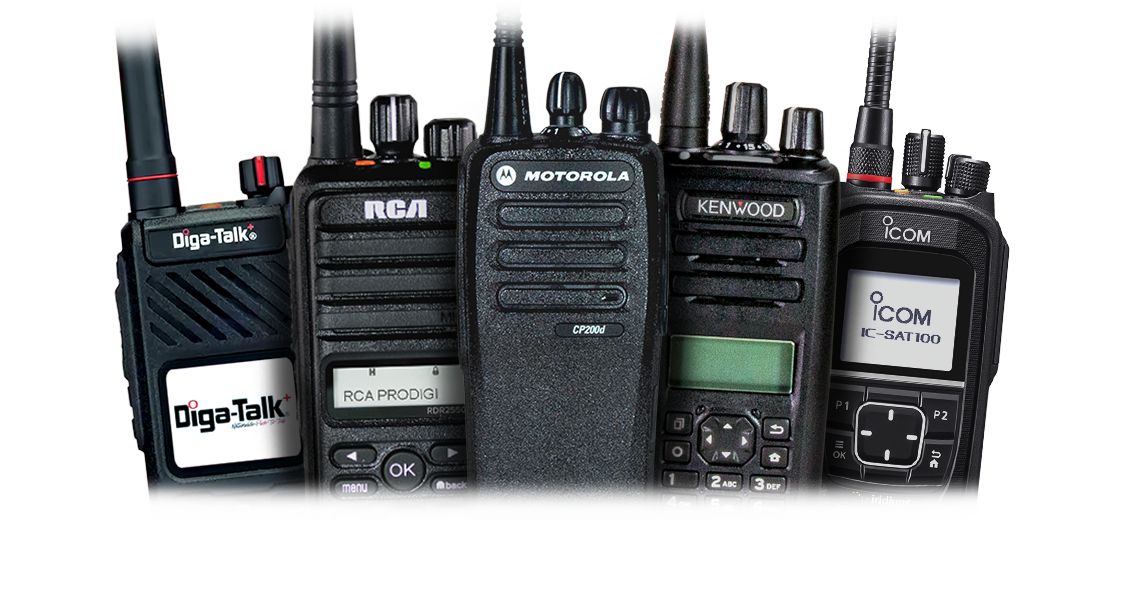
Use this quick guide to match models to your store type. We embedded product links in the Recommended Model column so you can click straight to specs, pricing, and same‑day availability.
| Environment | Recommended Model | Why It Works | Accessories to Add | Pro Tip |
|---|---|---|---|---|
| Grocery / Wet areas / Coolers | Choose the RDR4250 Waterproof Two-Way Handheld Radio for sealed durability. | IP‑rated housing resists moisture; digital clarity cuts compressor noise near refrigeration. | Discreet earpieces for front end; multi‑unit chargers to keep kits ready. | Verify IP rating matches your sanitation and nightly wash‑down routines. |
| Big‑box / Warehouse‑style aisles | Use the RDR4220 waterproof two-way radio for long aisles and backrooms. | Rugged build and strong UHF coverage span long, steel‑racked aisles. | Add a shoulder mic and high‑capacity battery for 10–12 hour shifts. | Test coverage with and without a repeater in far corners and yard. |
| Boutique / Specialty retail | Pick the BR200 handheld radio for compact, simple operation. | Compact, budget‑friendly, and intuitive—new hires talk on Day 1. | Low‑profile earpieces and single‑unit chargers suit small teams. | Label channels by department for simple onboarding. |
| Quick‑service / Counter‑service | Choose the Two-Way DMR digital radio RDR2500 for noisy kitchens. | DMR digital cuts fryer and steam noise; excellent in compact layouts. | Lightweight earpieces for counter staff; spare batteries for doubles. | Pre‑program curbside/pickup on its own dedicated channel. |
Channel Plan Templates That Keep Teams in Sync
A simple, named channel map cuts chatter and speeds responses. Use this starter template, then adjust to your footprint so every call lands with the right team in 2–3 seconds.
- Channel 1: Front End: Cashiers, service desk, quick price checks; keep traffic short and actionable.
- Channel 2: Stockroom: Pulls, inventory, back‑stock questions; confirm location and ETA before walking.
- Channel 3: Curbside/Pickup: Staging, parking bay calls, and handoff timing to avoid lot backups.
- Channel 4: Managers: Overrides, staffing moves, escalations, and schedule pivots; keep it calm.
- Channel 5: Loss Prevention: Discreet coordination, observations, and manager call‑ins; see LP section.
- Channel 6: Maintenance/Facilities: Spills, lighting, HVAC (heating, ventilation, and air conditioning); route building issues off shopper channels.
- Emergency Channel: Reserved for safety events only; radio silence unless life safety.
Loss Prevention and Safety: Discreet, Fast, Coordinated
LP (loss prevention) needs quiet speed. With earpieces and a dedicated LP channel, an associate can shadow, a manager can listen in, and security can position at exits—without tipping off guests. During emergencies, an all‑store emergency channel triages roles fast.
Think subtle, not dramatic: a quiet handoff near exits, code words for non‑customers in restricted areas, and calm, plain‑language updates. Managers coordinate de‑escalation while another teammate secures doors and calls 911 per policy.
If you lead LP, our guidance on two-way radios for security covers discreet gear, channel naming, and incident workflows.
Introduce a concise LP playbook sequence that teams can memorize:
- Spot: Quietly identify suspicious behavior; alert LP channel.
- Confirm: Manager or second associate validates via camera or proximity.
- Shadow: Maintain visual without confrontation; share descriptors.
- Intercept: Trained staff engage per policy at exit.
- Document: Capture time, aisle, outcome for incident reporting.
Tie-in With Stockrooms and DCs Without Missing a Beat
You’ve documented the incident—now prevent the next one by linking floor, stockroom, docks, and your DC (distribution center). Share Channel 2 (Stockroom) with Receiving during truck windows, or bridge (temporarily link) channels so pickers hear dock ETAs. Create a Transfer channel for store-to-store moves and a Curbside channel for bays. Extend yard coverage with a dock mobile and external antenna.
Call flow: Cashier on Channel 1 requests size check; Stockroom on 2 confirms location and ETA “90 seconds.” Dock on Receiving announces “Truck 14 at Door 3, eight pallets; start Pets.” Manager on 4 assigns runner. For transfers, Store A calls “Three units SKU 8871, pickup 14:30”; DC confirms purchase order (PO) and driver. Curbside on 3 radios “Bay B ready in two.”
Standardize across sites by mirroring channel names and timing cues with your DC; our warehouse two-way radios match store channels for clean handoffs.
Accessories That Multiply ROI
With channels mirrored to your DC, accessories turn good comms into great ops. They add discretion, comfort, and always‑ready power—cutting 10–20 seconds per assist and keeping LP (loss prevention) quiet at the register.
- Earpieces: Discreet LP and customer conversations; swivel or acoustic tube options; disposable tips keep hygiene simple.
- Speaker mics: Hands‑free for stock and curbside teams; clip to shoulder; great with gloves and forklifts.
- Multi‑unit chargers: Keep full shifts ready; reduce dead batteries; charge 6–12 at once; nightly drop‑and‑dock.
- High‑capacity batteries: Longer runtime for long shifts; add 2–4 hours; rotate labeled spares at lunch.
- Replacement antennas/clips: Reduce downtime from small breaks; keep a bin of spares; swap in under 60 seconds.
- Repeaters (if needed): Extend coverage in very large footprints; push through freezers, concrete, and mezzanines; stop dead spots.
Implementation Timeline and ROI You Can Measure
You’ve got the gear—earpieces, spare batteries, maybe a repeater. Now lock in ROI (return on investment) with a 4‑phase rollout and KPIs (key performance indicators). Want help? We’ll guide and ship fast.
| Phase | Typical Duration | What You Do | KPIs to Watch |
|---|---|---|---|
| Assessment | 2–3 days | Coverage walk, needs mapping, accessory checklist | Dead zones found, channel plan drafted |
| Pilot | 1–2 weeks | Program 6–10 units, train core team, tweak channels | Pickup wait time, price‑check time, staff adoption |
| Rollout | 1–2 weeks | Order full fleet, train all staff, post channel SOPs (standard operating procedures) | Customer wait time, LP (loss prevention) incidents handled, uptime |
| Optimize | Ongoing | Replace weak accessories, add batteries/repeaters | CSAT (customer satisfaction)/NPS (net promoter score), shrink trend, training time |
Why Discount Two‑Way Radio for Retail
You’re tracking CSAT (customer satisfaction), NPS (net promoter score), shrink, and training time—so you need dependable gear and a fast partner. We’ve spent 15+ years outfitting retail teams. Most orders ship same day, pre‑programmed to your channel map. Every purchase includes a 90‑day warranty, and we cover shipping on repairs. We’ll tailor programming, labels, and accessories to your footprint and budget.
Need help after launch? Our U.S.-based technicians answer live and walk coverage checks or reprogramming in minutes. We keep Motorola and RCA parts in stock, so replacements and accessories don’t stall your floor. If a unit goes down, we issue an RMA (return authorization) the same day and keep you talking with loaner options. Simple, fast, no runaround.
For deeper guidance, explore our two-way radios for retail and restaurants resource—models, channel maps, and accessories that work on real floors.
🛠️
Free Coverage Check
Send us your square footage and materials (concrete, coolers), and we’ll run a free coverage check or quick quote today. Low effort, same‑day answers.team online.
Licensing, Coverage, and Compliance: Avoid the Gotchas
Before you talk to a radio expert, lock down the basics that keep you compliant and clear. Avoid fines, dead spots, and awkward broadcasts—here are the gotchas and quick fixes.
- FCC Licensing: UHF/VHF (indoor/outdoor business bands) need an FCC (Federal Communications Commission) Part 90 license; keep a printed copy on-site.
- Interference planning: Scan mall neighbors; set DMR (digital mobile radio) color code and privacy codes; coordinate frequencies before opening day.
- Coverage tuning: Test coolers, elevators, loading bays; if dead spots persist, add a repeater (small in‑store booster) and external antenna.
- Battery hygiene: Rotate labeled packs daily; room‑temp storage; disinfect shared earpieces; follow SOP (standard operating procedure) for charging and wipe‑downs.
- Data privacy: Avoid PII (personally identifiable information) on open channels; use encryption for LP; move payment issues to phone
Frequently Asked Questions
Since we just covered privacy and encryption, here are the nuts-and-bolts answers retailers ask us daily. If you want tailored guidance, we’ll do a 10‑minute coverage consult.
- Q: What range do we need inside a typical store?: With UHF (ultra-high frequency) DMR (digital mobile radio), expect coverage across 20,000–60,000 sq ft. Freezers, mezzanines, or multi-level malls? Add a repeater to punch through steel and concrete.
- Q: UHF or VHF for retail?: UHF excels indoors through walls, shelving, and refrigeration. VHF (very high frequency) suits outdoor lots or garden centers. Many stores run UHF handhelds, plus a VHF mobile for yard or cart retrieval.
- Q: How many channels should we start with?: Begin with 4–7: Front End, Stockroom, Managers, LP (loss prevention), Curbside/Pickup, Facilities, plus one Emergency reserved. Keep names simple and post etiquette. Expand only when chatter slows response times.
- Q: Will our radios interfere with neighboring stores?: Use licensed Part 90 (business) frequencies, set DMR color codes/privacy codes, and coordinate with mall management. We scan and program around neighbors during setup to keep your channels clean.
- Q: Are waterproof radios necessary?: If you’re grocery, floral, sanitation, or curbside-in-the-rain, yes—choose IP‑rated (ingress protection) units. For dry boutiques, standard housings are fine. We’ll match rating to your wash‑downs and nightly cleaning.
- Q: How long do batteries last per shift?: Expect 10–14 hours on standard packs, 12–18 on high‑capacity. Charge overnight in multi‑unit docks, rotate labeled spares at lunch, and avoid over‑draining below 10% to extend lifespan.
- Q: Can we keep conversations private?: Yes. DMR offers encryption and privacy codes; dedicate an LP (loss prevention) channel, use earpieces at the register, and keep card or PII (personally identifiable information) issues off radio—move to phone.
- Q: What training is required?: Day one: push‑to‑talk, channel map, call signs, and “short, specific, safe” messages. Post a one‑page SOP (standard operating procedure) near chargers and run 10‑minute refreshers weekly. New hires are fluent by shift two.
Cross‑Industry Inspiration and Resources
New hires are fluent by shift two—so borrow the habits other fast‑moving teams rely on. We see hotels route front desk to concierge to housekeeping in under a minute using named channels and quiet earpieces. Facilities crews mirror logistics: dock-to-maintenance calls and spill cleanups run on dedicated talkgroups with an emergency override.
Want a hospitality playbook you can adapt in retail? Explore our two-way radios for hotels and resorts to mirror front desk–housekeeping handoffs, concierge discretion, and engineering response patterns.
Get Your Store Talking in 48 Hours
If that hospitality playbook sparked ideas, let’s put them to work this week. Book a 10‑minute consult; we’ll map coverage, recommend the right radios and accessories, and ship same day—pre‑programmed to your channels, live in 48 hours. Try it risk‑free with our 90‑day warranty and free repair shipping, then review results in 30 days. Ready to move fast?
Get Expert Help
Let’s plan your fall gutter tune-up