How Many Two-Way Radios Does Your Team Need?
How Many Two-Way Radios Does Your Team Need?
Budget one radio for every person who needs to talk in real time, then add 10 to 20 percent spares for charging, loss and repair. Put one charger bank on site per shift and plan on roughly 15 to 20 active talkers per channel. A 25-person crew typically lands at 28 to 30 radios and two channels.
How do I calculate how many two-way radios I need?
Start by counting the people who need to talk at the same moment, not your full headcount. A 40-person site where only 12 supervisors, dispatchers and leads carry a radio needs 12 to 15 units, not 40.
- Count concurrent talkers: supervisors, dispatch, security, and any role that has to reach someone else mid-task.
- Add 10 to 20 percent spares, with a floor of one spare no matter how small the count, to cover units on the charger, in repair, or handed to a new hire.
- Check shift overlap: if two shifts share even 15 minutes on site together, add one radio per overlapping role so nobody hands off mid-sentence.
- Round the order up to fill a charger bank evenly, typically sold in 6-slot or 10-slot trays, so every radio has a dock.
- Have each unit engraved with a name, badge number or role code as you order. It keeps a spare pool easy to reassign the moment headcount changes, instead of relabeling radios by hand later.
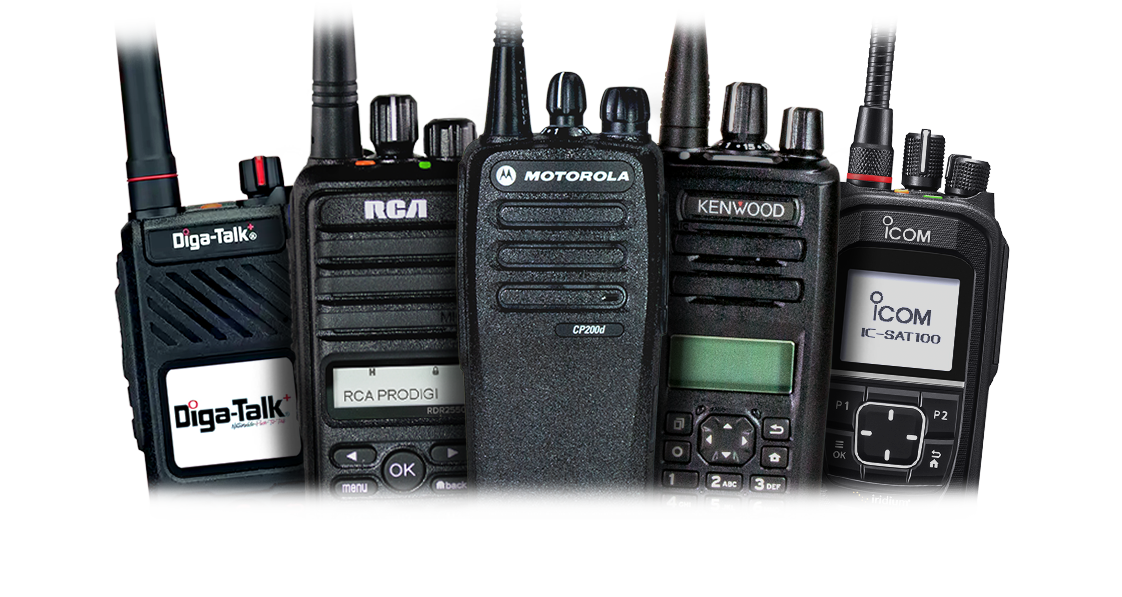
We have sized radio fleets for construction crews, warehouses and event teams for more than 20 years, and this five-step count is the same one our team runs on every quote call before recommending handheld two-way radios and accessories.
How many people can share one channel?
A single channel handles about 15 to 20 people who talk occasionally, such as retail floor staff or event ushers. Cut that to 8 to 10 people on a channel used for constant back and forth, like a security team or a loading dock during a rush.
Direct radio-to-radio range typically runs 1 to 2 miles depending on terrain and buildings, so a second channel is also the fix when a group is spread across a large site rather than simply talking often.
How many spare radios and batteries should I keep?
Keep 10 to 20 percent of your fleet as spare radios, and lean toward the higher end if your team works outdoors, in construction, or anywhere units get dropped or wet. A 10-radio fleet should have at least 1 to 2 spares on the shelf, ready to swap in mid-shift.
Battery needs scale with usage and shift schedule more than with headcount. A single-shift team with light, occasional traffic can often get by with a battery for every two or three radios, while a second shift on the same fleet means budgeting a full extra set of packs so an incoming crew is never waiting on a charger. Teams with heavy radio traffic, keying up constantly rather than checking in now and then, should plan on a spare battery for every radio, since a pack that gets run down fast needs a charged replacement the moment it dies.
Repair turnaround changes the math too. On a flat-rate repair with a fast turnaround, a damaged unit is often back on the shelf within a day or two, so 10 percent spares is usually enough. If a repair queue can run longer, plan closer to 20 percent so a unit in the shop never leaves a role without a radio.
How many chargers does my team need?
The simplest rule is one charger slot per radio in the fleet, so every unit has a home at the end of a shift. If budget is tight, you can get by with enough slots for one full shift’s radios, as long as the next shift’s units are already charged and waiting.
Gang chargers come in 6-slot and 10-slot trays. A 12-radio single-shift team fits comfortably on two 6-slot trays, while a two-shift operation needs enough trays to fully charge one shift’s radios during the other shift’s working hours.
Examples by team size
These three sizes show how the ratios above add up once spares, channels and chargers are counted together.
| Team size | Radios to order | Channels | Charger slots |
|---|---|---|---|
| 5 users | 6 (1 spare) | 1 | One 6-slot tray |
| 25 users | 29 (4 spares) | 2 | Three 10-slot trays |
| 100 users | 115 (15 spares) | 6 | Six 10-slot trays per shift |
A 5-person crew, common on a small job site or a single restaurant floor, needs one channel and a single charger tray. A 100-person warehouse or campus usually splits into six channels by department, with dock, floor and security each running their own.
Do I need more radios if I add a repeater or base station?
A repeater extends your direct 1 to 2 mile range across a bigger site or multiple buildings without handing out more handhelds. It adds one unit to the order, plus its own dedicated channel, rather than scaling with headcount.
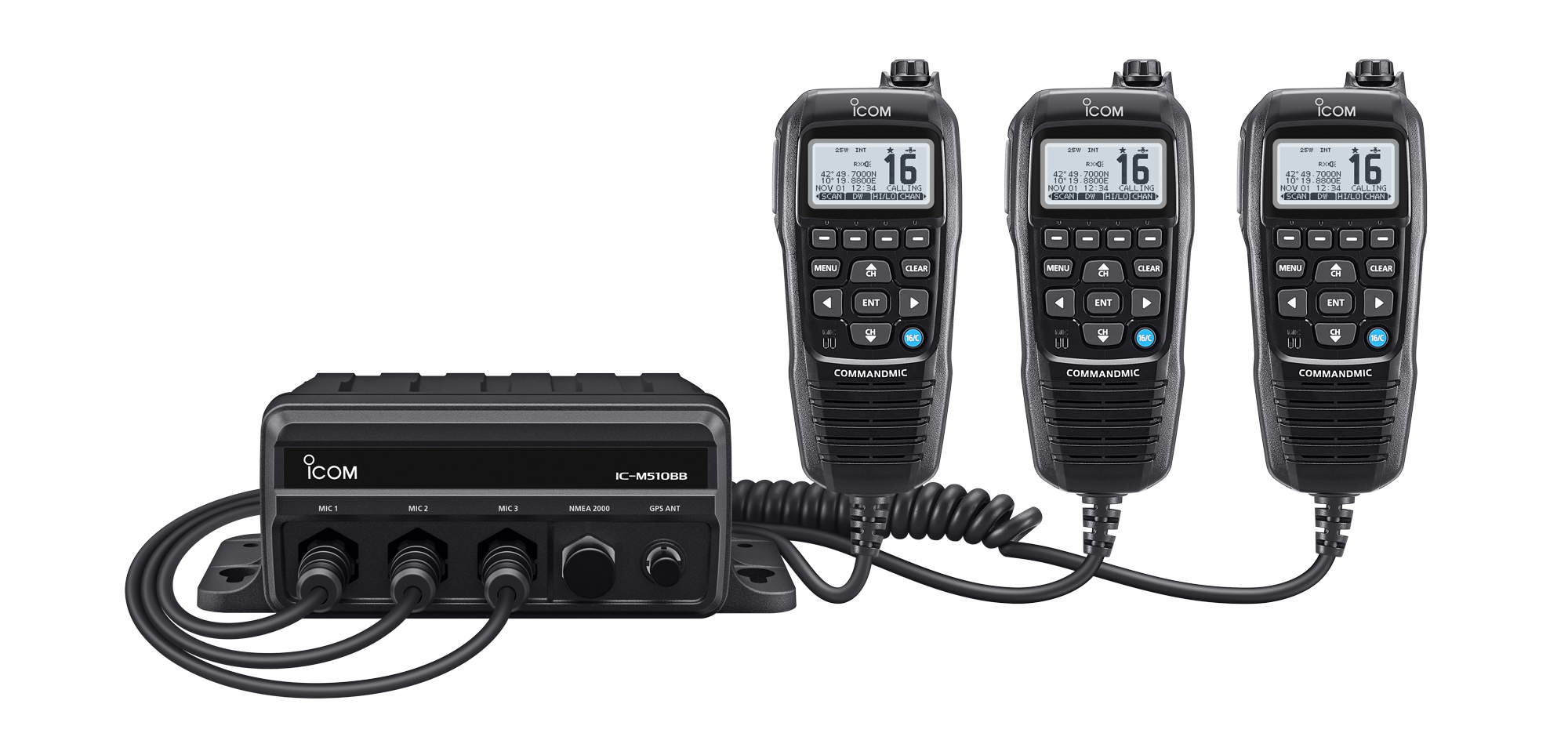
A base station works the same way for a fixed desk, such as a dispatch office or a front gate, so budget for it as one unit alongside the base station radios your dispatcher or front-desk staff will use, not as a multiple of your field radio count.
A campus with several buildings often needs one repeater per building cluster rather than one for the whole property, since walls, floors and distance all cut into that 1 to 2 mile range. Map dead zones during a walk-through before you order, and add a repeater channel for each one rather than more handhelds.
If any of these numbers do not quite match your site, especially a spread-out warehouse or an event stacking rented radios on top of your own fleet, talk to one of our radio experts for a free fleet consultation before you place an order.
No Comments