Discount Two Way Radio
How to Choose a Two Way Radio for Your Business
Buying radios for a business is a different decision than picking up consumer walkie-talkies. You are choosing equipment your team depends on every shift, that has to survive real working conditions, and that needs to keep working alongside the gear you already own. Get the specification right and you buy communication that pays for itself. Get it wrong and you end up with radios that do not reach across your site or a system that locks you into one manufacturer’s pricing for years.
This guide walks through how to evaluate business two way radios the way a purchasing manager should: match the radio to the job, check compatibility with what you run today, and look hard at total cost rather than sticker price. RCA radios sit at the center of that conversation because they deliver the specifications businesses actually need at a fraction of what the big brands charge.
Why Choosing the Right Radio Matters
A radio is a safety and productivity tool before it is anything else. When a warehouse picker needs a forklift moved or a construction crew has to stop a lift, the message has to get through the first time. Dropped or garbled communication costs money, and in some environments it costs a lot more than money. The right radio also protects your budget over a five to seven year lifecycle, so the smart approach is to define your requirements first, then find the radio that meets them for the lowest total cost.
Questions Every Business Should Ask Before Buying
Before you compare models, answer these five questions. They shape every specification that follows.
- How far apart will users be, and what is between them (walls, steel, floors, open ground)?
- What industry conditions will the radios face: dust, water, drops, noise, or hazardous atmospheres?
- How many hours per shift will each radio run before it can be charged?
- Do you already own radios you need to keep talking to, and what brand and mode are they?
- How many units do you need now, and how many more will you add over the next few years?
Answer those honestly and you have most of a buying spec. If you are not sure, this is exactly where a quick call to a radio specialist saves you from ordering the wrong thing.
Range Requirements
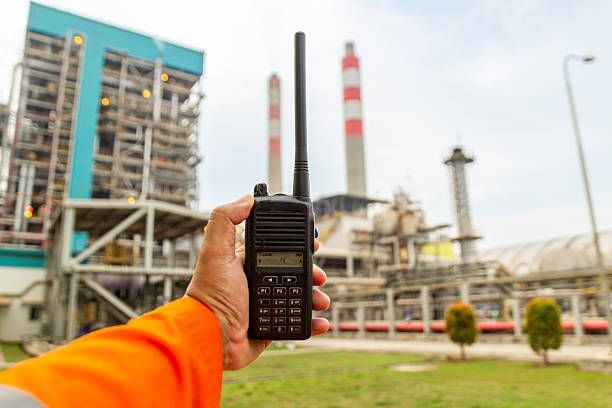
Range is the most misunderstood number in the industry. Advertised figures assume perfect line of sight, which almost never describes a real workplace. In typical commercial use, a good handheld gives you roughly 1 to 2 miles of reliable coverage, and buildings, racking, and terrain shorten that. For a single warehouse, store, school, or job site, portable radios usually cover the area on their own. When you need to reach across a large campus or multi-building facility, a repeater extends coverage far beyond what a handheld manages alone.
Industry Considerations
Different industries push radios in different directions, so match the build to the work.
- Construction: Radios take drops, dust, and weather. Prioritize impact resistance, a sealed housing, and loud audio that cuts through machinery. Rugged portable two way radios for construction are built for exactly this abuse.
- Warehouse: Steel racking blocks signal, so digital audio clarity and reliable in-building coverage matter more than raw distance. Comfortable belt-worn units keep pickers and forklift drivers connected all shift.
- Hospitals and healthcare: Quiet operation, discreet earpieces, and clean audio in busy corridors are the priorities. Interference control keeps communication professional in patient areas.
- Retail: Compact, lightweight radios with covert earpieces let staff coordinate stock, security, and customer service without disrupting the floor.
Digital vs Analog Radios
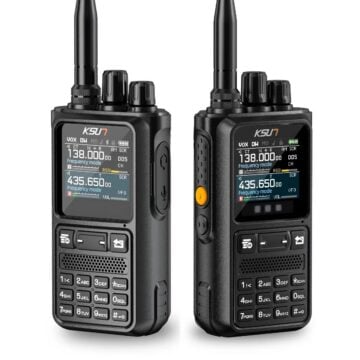
Analog radios are proven, simple, and inexpensive, and they still serve plenty of small operations well. Digital radios (typically DMR) deliver clearer audio at the edge of coverage, better noise rejection, longer battery life, and features like text messaging and individual calling, while fitting more conversations onto the same frequencies. You do not have to switch everything at once: many RCA models run in both analog and digital modes, so you can operate alongside your current analog fleet today and move to digital when it suits your budget. That flexibility is one reason businesses standardize on RCA.
Battery Life and Durability
Battery performance decides whether a radio survives your longest shift. Look for a unit that comfortably covers your work period with margin, then plan spares and charging around it. Lithium-ion packs support quick charging and keep radios in rotation. Batteries are also a consumable, so affordable, readily available two way radio batteries and chargers keep a fleet running for years without a painful bill every time a pack ages out.
Durability comes down to matching the rating to the job. Commercial radios are rated for dust and water using IP ratings and for shock using military standards. A radio bound for a wet, dusty, or drop-heavy site should carry a sealed IP rating, while an office or retail radio can prioritize size and weight. Buying more ruggedness than you need wastes money; buying less means early replacements.
Accessories
Accessories turn a radio into a tool your team will actually use. Surveillance earpieces and remote speaker microphones keep hands free and conversations discreet, multi-unit chargers simplify end-of-shift routines, and heavy-duty cases protect the investment. Planning accessories at purchase time, rather than as an afterthought, means everything works together and ships together.
Compatibility with Existing Motorola Systems
Here is the point that saves businesses the most money, and the one most buyers do not realize: if you already run a Motorola fleet, you do not have to buy Motorola to expand it. RCA radios integrate cleanly with Motorola systems, sharing the same frequencies, channels, and signaling so old and new radios talk to each other without a hitch.
This matters most for fleets built on discontinued models. Plenty of organizations still run reliable Motorola gear, including CP200d radios, and worry about what happens when they need to grow. You can keep that system alive by adding RCA two way radios that drop straight into the existing setup, with no rip-and-replace, no forced upgrade, and no lock-in. If you want a side-by-side view of features and price, our Motorola compatible radio comparison lays it out clearly.
Why RCA Delivers Better Long-Term Value
Most buyers meet RCA after sticker shock from a Motorola dealer quote. The specifications look similar, but the prices are worlds apart. RCA radios match comparable Motorola models on range, audio quality, durability ratings, and digital features, then come in at substantially lower cost per unit. The value goes beyond the purchase price:
- Better warranty: RCA radios are backed by strong warranty terms that reduce your risk over the life of the fleet.
- Better service: When you call, a live radio expert answers quickly. No phone tree, no waiting on hold, no waiting days for a callback.
- Fast shipping: Most orders ship the same day, so you are not stuck waiting weeks for equipment your team needs now.
- Lower total cost: Affordable radios, affordable accessories, and affordable batteries add up to a fleet that costs far less to own and maintain.
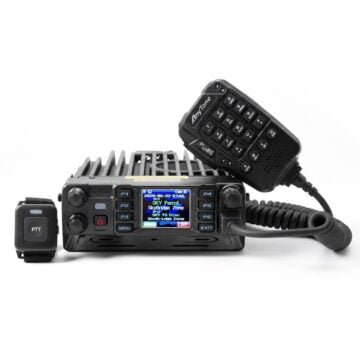
For teams that also need in-vehicle communication, the same value carries over to mobile radios for cars and trucks, giving you one supplier and one compatible ecosystem across handhelds and vehicles.
Common Buying Mistakes
- Trusting advertised range. Plan around realistic in-building coverage of about 1 to 2 miles, not the box figure.
- Overpaying out of brand habit. A brand name does not add features. It adds cost. Compatible RCA radios deliver the same performance for less.
- Assuming you are locked into Motorola. You are free to buy compatible radios from another supplier at any time.
- Ignoring accessories and batteries. The radio is only part of the spend. Budget for the whole kit.
- Buying without asking questions. A five-minute conversation about your site prevents costly returns and reorders.
Final Recommendations
Start with the job, not the catalog. Define your range, environment, shift length, and existing equipment, then choose a radio that meets each one at the lowest total cost. For most businesses that means dual-mode RCA radios that run analog today, move to digital when you are ready, and integrate seamlessly with any Motorola gear you already own. If you are expanding a fleet, replacing aging units, or building a system from scratch, talk it through with someone who does this every day. Our team will help you spec the right equipment and price a complete solution. Reach out through the contact our radio specialists page or call and get a person on the line right away.
Frequently Asked Questions
Do RCA radios work with my existing Motorola radios?
Yes. RCA radios share the same frequencies, channels, and signaling used by Motorola equipment, so they integrate directly into an existing Motorola fleet. Your current and new radios talk to each other without any special adapters or system changes.
I have discontinued Motorola CP200d radios. Can I still expand that system?
You can. There is no need to replace a working system just because a model is discontinued. Compatible RCA radios drop into a CP200d setup and let you add or replace units while keeping the radios you already own in service.
Are RCA radios as good as Motorola?
RCA radios offer comparable specifications on range, audio quality, durability, and digital features at a substantially lower price, with a better warranty and faster support. Many customers switch after seeing a Motorola dealer quote.
How far will a business two way radio reach?
In typical commercial conditions, a good handheld covers roughly 1 to 2 miles, with buildings, racking, and terrain reducing that range. For large campuses or multi-building sites, a repeater extends coverage well beyond what a portable radio manages on its own.
Should I choose digital or analog radios?
Analog is simple and inexpensive and works well for small operations. Digital offers clearer audio, longer battery life, and more features. Many RCA models run in both modes, so you can operate alongside an analog fleet now and migrate to digital when it fits your budget.
How much can a business save by choosing RCA instead of Motorola?
Savings vary by model and quantity, but RCA radios commonly cost significantly less per unit than the comparable Motorola model, with additional savings on accessories and batteries over the life of the fleet. Request a quote for pricing on your specific configuration.
What kind of support and shipping can I expect?
You get fast, responsive service. A live radio expert answers the phone quickly with no long hold times, and most orders ship the same day so your team is not left waiting on equipment.
What accessories should I budget for?
Plan for earpieces or speaker microphones, spare batteries, and multi-unit chargers, plus cases or carry options for the environment. Budgeting these at purchase time keeps the whole kit compatible and shipping together.
No Comments