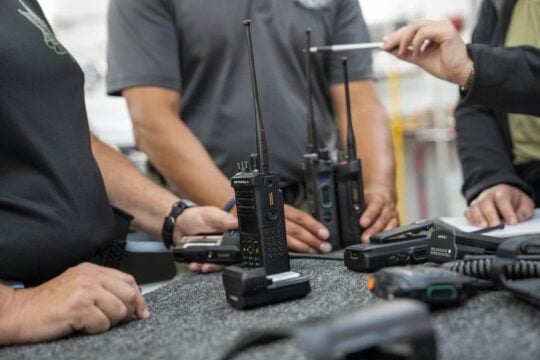

Mission Critical Communications for 21st Century Schools

Now with school back in session you may be thinking about two-way radio communication and how it can keep your students and staff safe. We’ve created an informative guide that will help school administrators with answers to questions about radios, two-way radio tips, and product recommendations.

This free guide covers:

  • Why Two-Way Radios are Essential Tools for Schools
  • Desert View Academy Case Study
  • 5 Important Reasons Two-Way Radios are Better Than Cell Phones on Campus
  • Two-Way Radio Recommendations for your Campus
  • Emergency Alert Feature
  • How to Use Your Radios In Emergency Situations
  • Improve School Bus Safety with Two-Way Radios

Click here to download your free guide

No Comments

Leave a Reply

Your email address will not be published. Required fields are marked *

Frequently Asked Questions

1 What communication strategies are essential for enhancing school safety?

The free guide outlines effective communication strategies crucial for 21st-century schools, focusing on rapid response and coordinated efforts during emergencies. It details how to establish clear communication protocols to ensure the safety of students and staff.

2 What type of two-way radio equipment is recommended for school safety?

The guide provides recommendations on the best two-way radio equipment suitable for educational environments. It covers features and specifications that ensure reliable, mission-critical communications across campus, supporting various safety scenarios.

3 How can this guide help improve our school's emergency response?

This guide offers insights into developing robust communication plans that streamline emergency response procedures. It helps schools implement systems that facilitate immediate alerts and coordinated actions among staff, enhancing overall campus safety.

4 Why are mission-critical communications important for modern schools?

Mission-critical communications are vital for modern schools to ensure immediate and reliable information exchange during daily operations and emergencies. This guide emphasizes their role in protecting students and staff by enabling swift decision-making and coordinated responses.