Walkie Talkie vs Two Way Radio | Key Differences Explained
Walkie Talkie vs Two Way Radio: Key Differences Explained
Quick answer: A walkie talkie is a type of two way radio. The term “two way radio” describes any device that can both send and receive voice over radio frequencies. “Walkie talkie” refers specifically to a handheld, battery-powered, portable version of a two way radio. So all walkie talkies are two way radios, but not all two way radios are walkie talkies. Mobile and base station radios are also two way radios.
People use both terms interchangeably, and most of the time that’s fine. But they point to a real difference in form factor and capability that matters once you’re choosing radios for a job site, a school, a warehouse, or a security team. Here’s what each term means, where they overlap, and how to pick the right radio without overpaying.
What Is a Walkie Talkie?
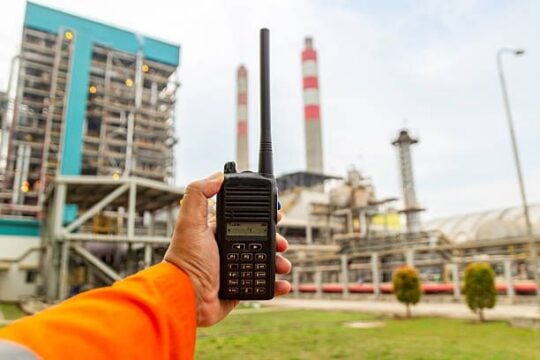
A walkie talkie is a handheld, portable two way radio you can carry and operate with one hand. The name dates to World War II, when soldiers needed a radio they could walk with and talk into at once. Early models were bulky backpack units; the concept stuck and the design shrank into the pocket-sized handhelds common today.
The defining feature is the push-to-talk (PTT) button: hold it to transmit, release it to listen. Only one person on the channel talks at a time, which keeps things orderly on a busy crew. There’s no dialing, no call setup, and no monthly bill. You key up and the message goes out instantly to everyone on the channel.
Modern walkie talkies run on rechargeable batteries, clip to a belt or vest, and typically deliver around 1 to 2 miles of real-world coverage depending on terrain. Consumer FRS units from a big-box store are walkie talkies. So are the professional handhelds used by warehouse teams, event staff, and construction crews, just built to a far higher standard for durability, audio clarity, and battery life.
What Is a Two Way Radio?
A two way radio is any radio device that can transmit and receive, letting users hold a conversation. This is the umbrella term, and it covers three main form factors.
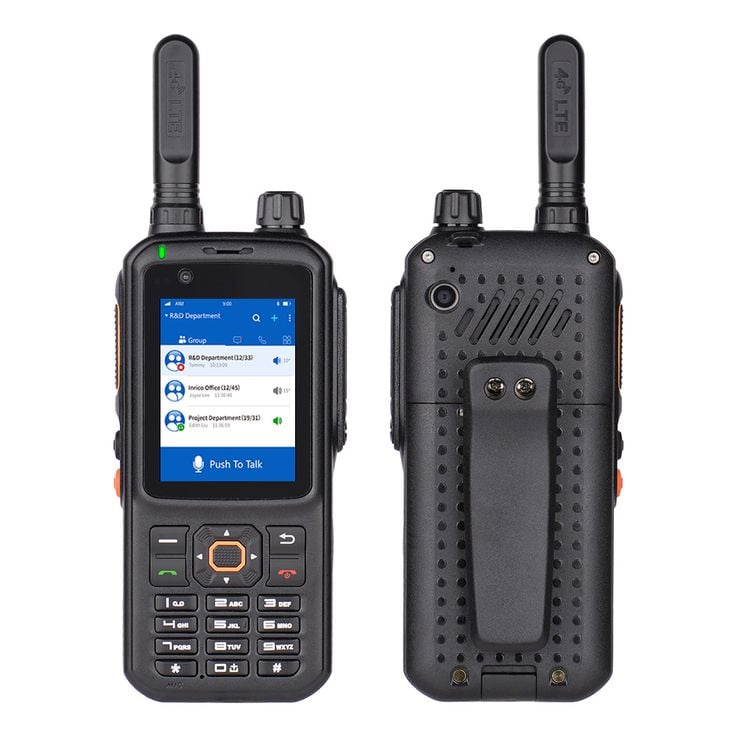
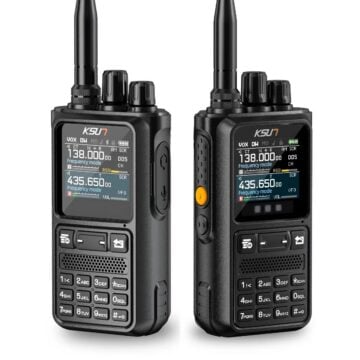
- Handheld (portable) radios. These are the walkie talkies: carried on the body, battery-powered, built for mobility. Our handheld two way radios cover entry-level through nationwide LTE models.
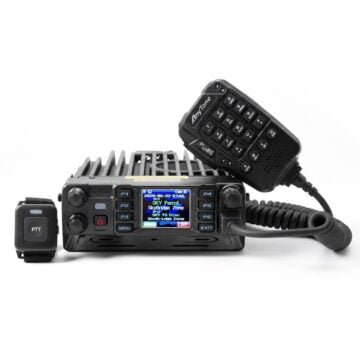
- Mobile radios. Mounted in a vehicle dash and powered by the vehicle’s electrical system. They use higher transmit power and an external antenna, so they reach much farther than a handheld, which makes them the standard for fleets, trucking, and municipal vehicles.
- Base station radios. A fixed unit at a desk or dispatch point, often paired with a large external antenna and connected to a repeater. Base stations anchor a system and coordinate the handhelds and mobiles in the field.
Two way radios also split by signal type. Analog radios are simple, reliable, and still widely used. Digital radios (DMR and P25) add clearer audio at the edge of coverage, longer battery life, text and GPS features, and built-in encryption. So when someone says “two way radio,” they could mean a belt-clip handheld, a truck-mounted mobile, or a dispatch console. “Walkie talkie” always means the handheld version.
Key Differences at a Glance
Because a walkie talkie is one category of two way radio, the table below contrasts the portable handheld with the broader two way radio family.
| Feature | Walkie Talkie (Handheld) | Two Way Radio (All Types) |
|---|---|---|
| Form factor | Portable, handheld, body-worn | Handheld, vehicle-mounted, or fixed base |
| Power source | Rechargeable battery | Battery, vehicle power, or AC mains |
| Typical range | 1 to 2 miles, terrain dependent | 1 to 2 miles handheld; much farther with mobiles, base stations, and repeaters |
| Transmit power | Lower (often 4 to 6 watts) | Up to 25 to 50 watts for mobile and base units |
| Mobility | Fully mobile, carried on the person | Varies: portable, in-vehicle, or stationary |
| Best for | On-foot teams, events, warehouses, schools | Whole systems spanning field crews, vehicles, and dispatch |
| Signal options | Analog or digital | Analog or digital (DMR, P25) |
When to Use Each
It comes down to how your people move and how far they need to reach.
Choose a walkie talkie (handheld) when
- Your team is on foot and needs to communicate while moving. Think retail floor staff and restaurant crews coordinating across a building.
- You run events, security patrols, or production crews where instant, hands-free contact matters.
- Coverage of 1 to 2 miles fits your site, like a campus, warehouse, store, or venue.
- You want gear that’s easy to issue, charge overnight, and hand off between shifts.
Choose mobile or base station radios when
- Drivers need to stay in contact across a city or region, so a higher-power, vehicle-mounted radio earns its keep.
- You’re running a dispatch operation that coordinates field crews from a central point.
- You need to extend coverage well beyond handheld range by tying mobiles and base stations into a repeater.
Most real-world systems mix both. A manufacturing plant might give floor supervisors handhelds while dispatch and shipping run base stations, all on the same channels. For a deeper breakdown by sector, see our guide to the best two-way radios for specific industries.
Which Should You Buy?
For most teams the real question isn’t “walkie talkie or two way radio.” It’s which radios and which brand give you the coverage you need at a price that makes sense, because brand markups vary a lot.
We distribute RCA two way radios as our primary line, covering the same handheld, mobile, and base station form factors above. RCA delivers the same or comparable specifications and performance as the big-name brands at a much lower cost, with a better warranty and faster service, and no compromise on audio, durability, or features.
If you already run Motorola gear, here’s where the savings come in: RCA radios are Motorola compatible. You do not need to buy Motorola to expand or replace parts of a Motorola fleet. RCA handhelds program to match your current radios and drop into existing channels, so they integrate cleanly with the units you already own. That’s especially useful for a discontinued fleet like a Motorola CP200d system, where new units are hard to source. Keep what you have and fill in with affordable RCA units alongside them.
If a Motorola dealer quote has ever given you sticker shock, RCA is the affordable answer to the same job, and you’re never locked into one brand for future purchases. Not sure which model fits? Call us. We answer quickly, there’s no waiting on hold, and you get immediate help from people who know radios. We’ll match you to the right unit, confirm compatibility, and ship fast.
Shop handheld two way radios or request a free quote to get pricing on a setup built around how your team works.
Frequently Asked Questions
Are walkie talkies two way radios?
Yes. A walkie talkie is a portable, handheld type of two way radio. Every walkie talkie can both transmit and receive, which is exactly what makes a radio “two way.” The term simply highlights that it’s the carry-and-talk handheld form factor rather than a vehicle-mounted or base station radio.
What is the difference between a walkie talkie and a two way radio?
There’s no difference in function: a walkie talkie is one kind of two way radio. The difference is scope. “Two way radio” covers all form factors (handhelds, vehicle-mounted mobiles, fixed base stations), while “walkie talkie” means only the portable handheld version.
How far does a walkie talkie reach?
Most professional handheld two way radios deliver about 1 to 2 miles of usable range in real-world conditions. Buildings and hills shorten that; open ground extends it. To cover a wider area, pair handhelds with a repeater, mobile radios, or base stations.
Do I need a license to use a two way radio?
It depends on the radio. Low-power consumer FRS walkie talkies are license-free. Most professional radios that businesses, schools, and crews rely on operate on licensed frequencies, which requires an FCC license. We can walk you through whether your use case needs one.
Can RCA radios work with my existing Motorola radios?
Yes. RCA radios are Motorola compatible, so they integrate with your existing Motorola fleet on the same channels and settings. You don’t need to buy Motorola to expand or replace units, which makes RCA a practical, lower-cost way to grow a system, including discontinued setups like the Motorola CP200d.
Why are RCA radios cheaper than Motorola?
RCA delivers the same or comparable specifications and performance without the premium brand markup that drives up Motorola dealer pricing. You get comparable durability and audio, a better warranty, faster service, and a much lower price, which is why RCA is a strong cost-effective Motorola alternative.
No Comments